
A credit card is essential gear for overseas shopping. Credit cards used for international purchases usually start with 4 or 5 and have a Visa or Master logo on the back. These cards have a foreign currency account, allowing you to spend abroad. You can apply for a foreign currency credit card at any major bank, both online and at the counter. Here's a detailed introduction:
A dual-currency card (local currency + one foreign currency) is a collaboration between banks and VISA or MASTERCARD. It supports both RMB and USD settlement. This means you can use it for RMB settlement via UnionPay in China, and when shopping abroad or on foreign websites, you can make purchases at merchants that accept VISA or MASTERCARD, with settlement in USD. Dual-currency credit cards are internationally accepted cards where you spend first and repay later. They offer an interest-free period of up to several tens of days (20-50 days, depending on the bank) and allow you to repay foreign currency transactions with RMB.
A multi-currency card (local currency + multiple foreign currencies) is ideal for global shopping. It waives currency conversion fees and saves you the hassle of carrying multiple cards. Foreign currency bank cards can be categorized into VISA, MASTER, and AMERICAN EXPRESS (abbreviated as AE). Among these, VISA cards are the most common (recommended for linking to PayPal accounts), MASTER is a long-term co-promotional partner of AMAZON, and AE cards are accepted on more US websites. So, if you only want to get one card, I strongly recommend getting an AE card!
When choosing a credit card, always keep these four points in mind:
First: Security. Why emphasize this? Let's look at the differences between domestic and international card usage:
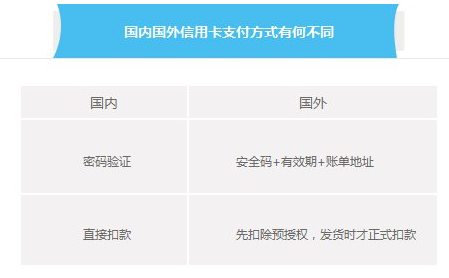
See the difference? Overseas, no password is required for purchases, and there are no features like Alipay. What's more, for your convenience, many websites can directly save your credit card information. The next time you shop, you just click checkout, and the website deducts the amount from your card. Isn't that con (dan) ve (gerous) nient? Plus, domestic banks take a long time to investigate card fraud, usually around 60 days. Online fraud, in particular, can be nearly impossible to trace.
Second: Lots of perks. This is secondary for us, but we all love a good deal, right? Okay, okay, let's go for credit cards with great perks!
Third: Diversity. Besides shopping from the US, we'll gradually explore shopping from Germany, Italy, the UK, Japan, and various other places. If you only use a dual-currency card, the bank won't tell you that you'll incur a currency exchange fee of 1-1.5%.
Fourth: Comprehensive supporting services. If you can get a credit card that also offers travel insurance, that would be even better.
If you already have a dual-currency card, how can you ensure its safe use? Here are some tips:
Method 1: Lower your credit card limit to minimize potential risks.
Method 2: Enable SMS notifications. If the credit card website supports it, also enable WeChat notifications to stay informed of every transaction in real-time and avoid any potentially risky transactions.
Method 3: Apply for a virtual credit card. This is separate from your main card, allows you to set a different credit limit, but is more complicated to operate. Not recommended.
Regarding credit card applications, many people complain about low credit limits. I think if your approved credit limit is low, you should consider whether you already have too many credit cards under your name, or if the limits on your other cards are too high.
Because every bank, besides reviewing your information with them,
will also check your personal credit report.
If the limits on some of your credit cards are too high, it can affect the approval of limits for other cards.
For example, if your credit report shows a total credit limit of around 100,000, and your other cards add up to about 95,000, then your new card might only get a limit of 4k or 5k.
Of course, this depends on each bank's review strictness and whether they need to attract more customers at the time.
So, if you have cards you rarely use with high limits, you might consider:
1. Lowering the limit
2. Cancelling them directly
I hope all this information is helpful to you!