

Shoe and clothing sizes for overseas purchases are a common headache for many. Many beginners, unfamiliar with sizing, often intend to buy adult shoes but end up purchasing children's shoes instead—a real lesson learned right next to us. Let's continue our explanation about size selection, focusing on how to choose the right size when buying shoes.
I have to say the simplest method is to try on your favorite brand at a physical store, find the right size, and then order it online. This method works for some brands where the size difference between domestic and international versions isn't significant. However, many brands either don't have try-on options domestically or the fit differs from the online version. Here's a general approach:
1. First, measure your foot length:
Foot length measurement method (illustrated)
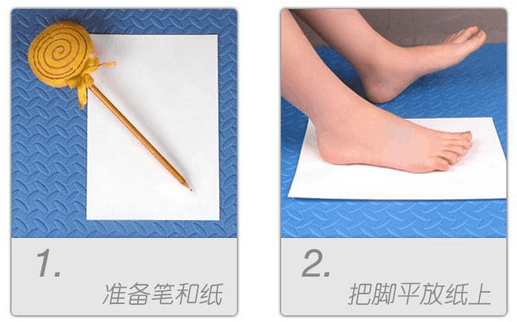
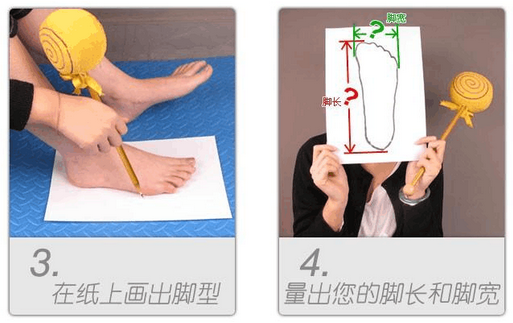
Precautions for measuring foot length
1. Measuring posture: Please stand with your weight evenly distributed on both feet while measuring.
2. Athletic shoe measurement: If you need to buy athletic shoes, it's recommended to wear socks suitable for the corresponding sport before measuring your foot length.
3. Measurement note: Human feet are only roughly symmetrical, so please use the data from the larger foot as the standard.
4. Measurement time: It's recommended to measure your foot length in the afternoon, as your feet will be larger at that time.
2. Then, refer to the size chart provided by the shopping website to find your corresponding size.
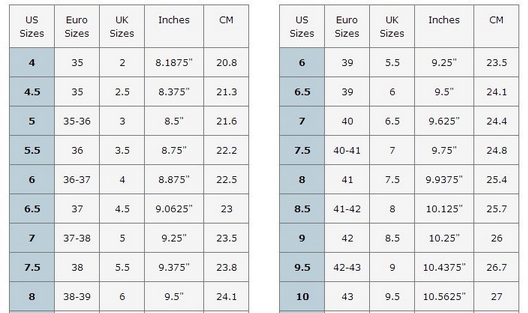
Generally, size charts on US websites include information like US, EU, UK, CM. At this point, we usually refer to length and width, as these standards are internationally recognized.
Additionally, let me explain these size standards:
I. Length
Chinese sizes are consistent with European sizes. The calculation formula is: foot length value (mm) / 5 - 10. For example, 225/5-10 = size 35.
US and UK sizes increase by 0.5 per increment. For the same size, UK sizes are 1-2 sizes smaller than US sizes.
There is no perfect formula for US sizes, but roughly it can be calculated as 0.75 * EU size - 23.
II. Width
Foreigners mark shoe sizes more complexly than domestic ones. Besides length, there is also width. Below, I've compiled a summary table of overseas shoe sizes. When buying shoes on Amazon US, you often see letters like D(M), B(M), D, C/D, 2E. What do these mean? Shoe widths are divided into nine types based on gender: men's shoes have 4 width options, and women's shoes have 5 width options. Details are as follows:
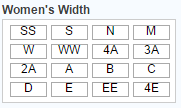
1. X-Narrow: Women's S or AA
2. Narrow: Women's N or A, Men's N or C or B
3. Medium: Women's M or B, Men's M or D (usually this width is sufficient)
4. Wide: Women's W or D or C/D, Men's W or EE (2E)
5. X-Wide: Women's XW or E or EE (2E), Men's XW or EEE (3E) or EEEE (4E)
For example: B(M) refers to women's medium width shoes, C/D refers to slightly wider. D(M) refers to men's medium width shoes, 2E refers to slightly wider. That is, E is 0.47625 cm wider than D, 2E is 0.47625 cm wider than E... When buying, consider that Chinese feet are generally wider than European or American feet. Overseas shoppers with wider or higher insteps may consider choosing wide or even extra-wide options.
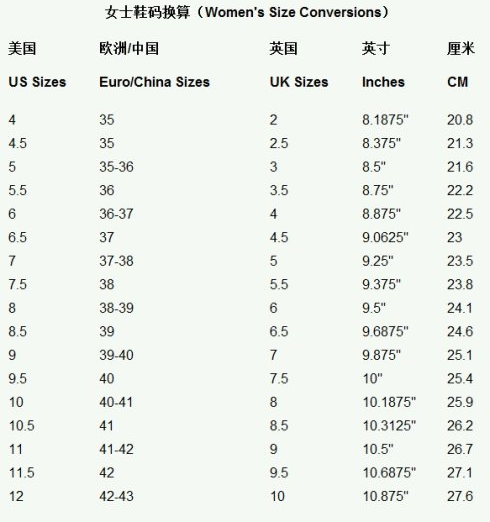
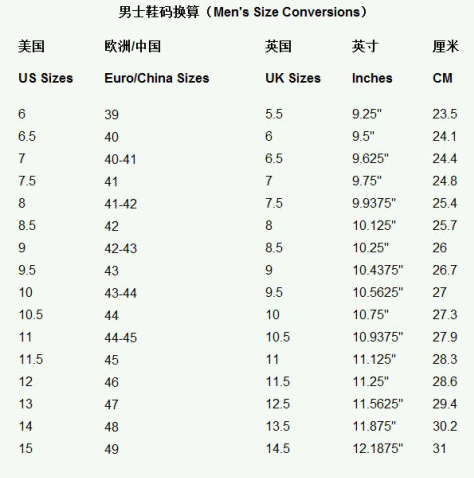
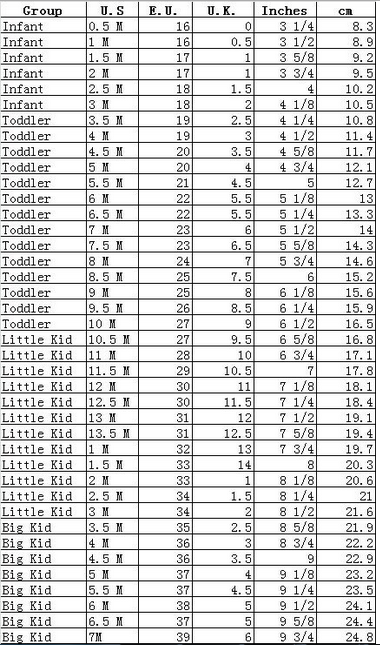
A lazy method is to directly look at the European size (Euro), which is generally similar to our domestic sizes. You can directly choose your usual size, but there is some risk as subtle differences exist between brands.
Some brands have physical stores domestically. You can try on a few similar or identical styles, remember the size, to help with online selection.
3. Adults can also wear children's sizes
American youth are well-developed and tall, so their shoe sizes are also large. Some big kids' shoe sizes overlap with adult sizes, making them perfectly suitable for smaller-built Easterners.
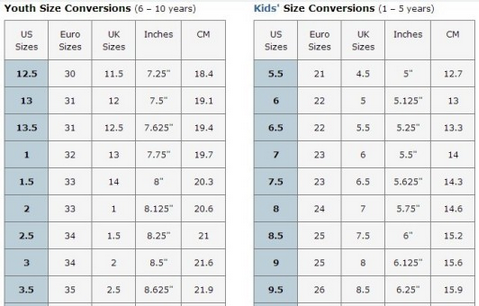
The method for selecting shoe sizes is the same as introduced earlier.
Since European sizes are not as confusingly divided as American ones (no big kids), you can still lazily choose the European size (Euro) directly. This way, ladies can confidently pick shoes to wear!