

Shipping forwarding is certainly familiar to "overseas shopping enthusiasts." The basic process of overseas shipping forwarding is:
1. The user adds the desired items to the shopping cart.
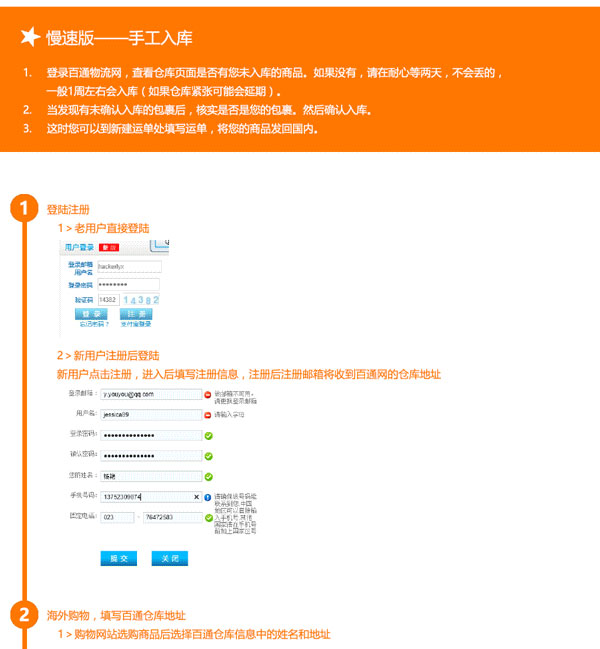
2. Select and register with a suitable shipping forwarding company, communicate with customer service, and obtain the company's overseas warehouse address.
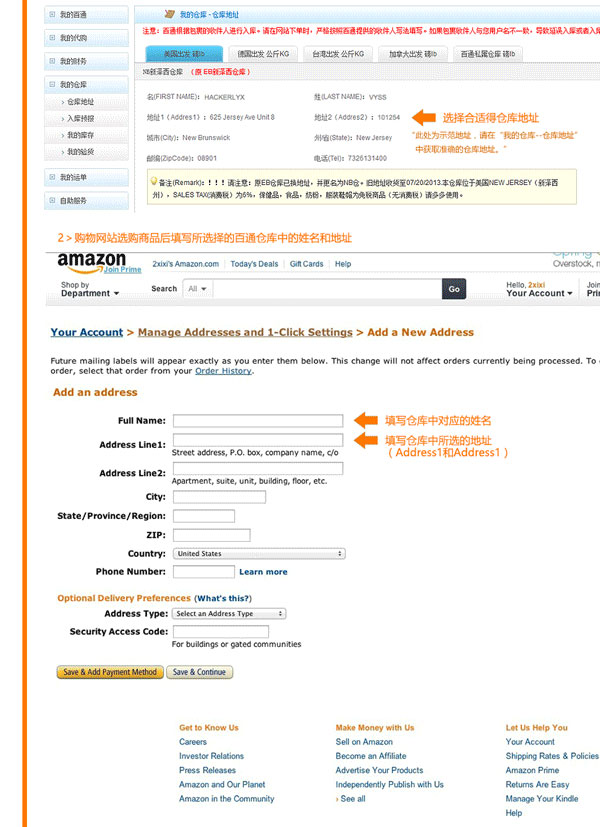
3. The user returns to the shopping website. Before placing the order, fill in the [Recipient Name/Address] field with the warehouse address and recipient name provided by the forwarding company.
4. After submitting the order and completing payment, you can check the corresponding package's [Tracking Number] within 2-3 days.
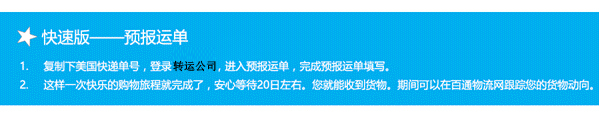
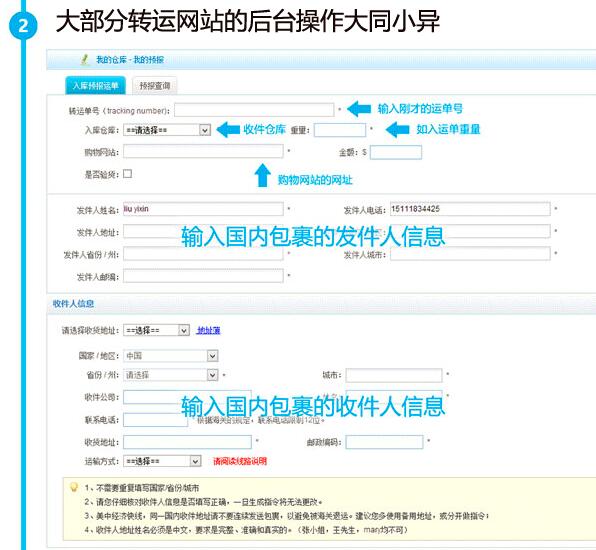
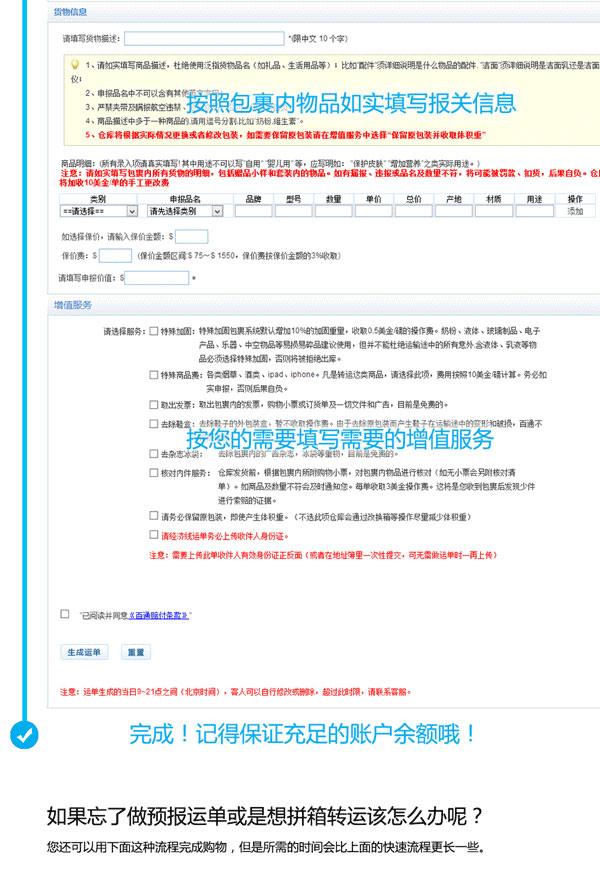
5. After obtaining the [Tracking Number], log in to the forwarding company's website and enter relevant information, such as: order number, package weight, domestic recipient name/address/contact information, and corresponding customs declaration information.
6. After confirming and generating the pre-advice order, make the online payment, and then you can simply wait to receive the goods.
Here is an example:
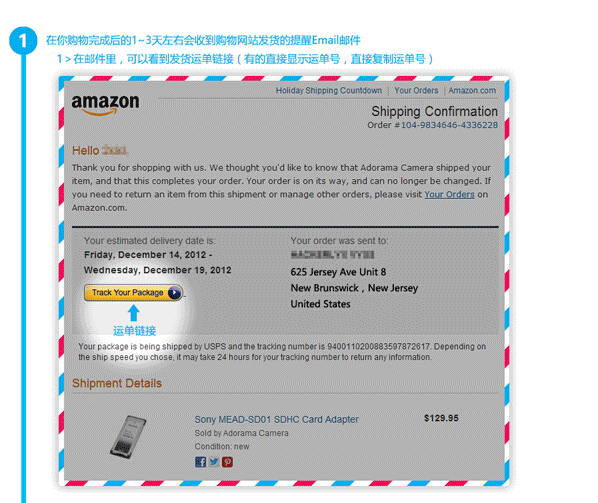
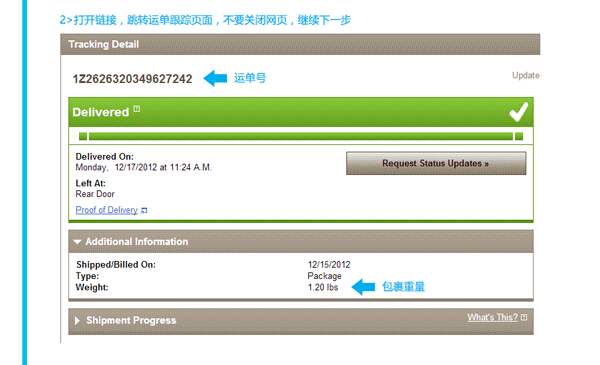
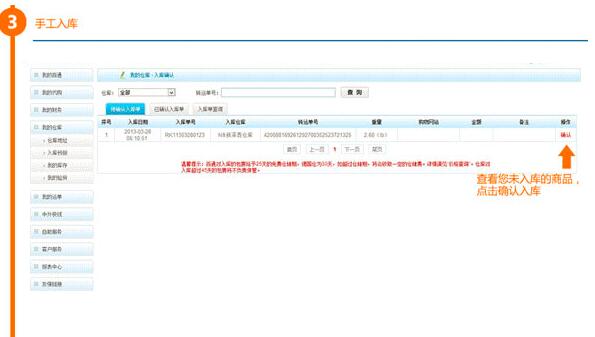
For example, let's use a forwarding company as an example to explain the filling method (this is just an example, the courier company is not recommended).
The following warehouse addresses are for reference only. After registering with a forwarding company, you will see your own private address in your account.
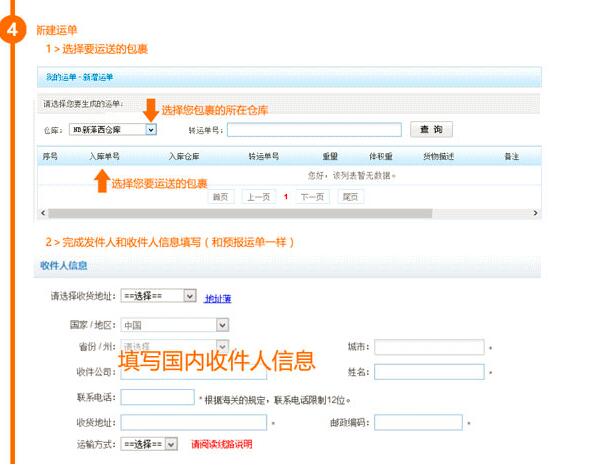
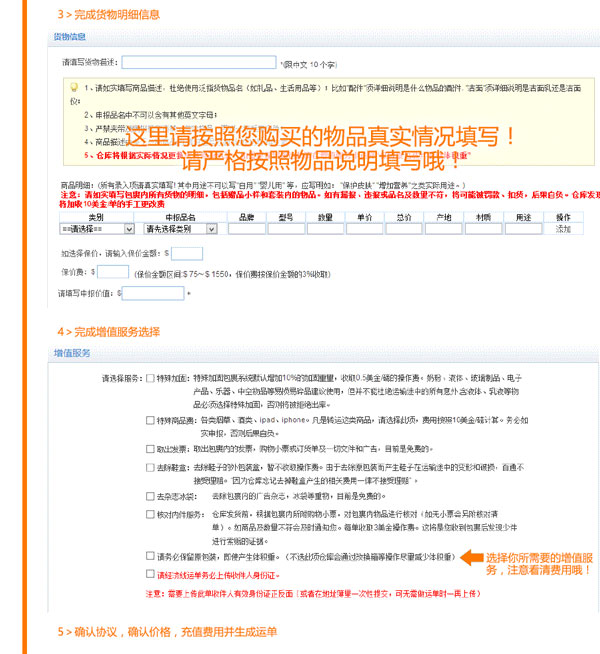
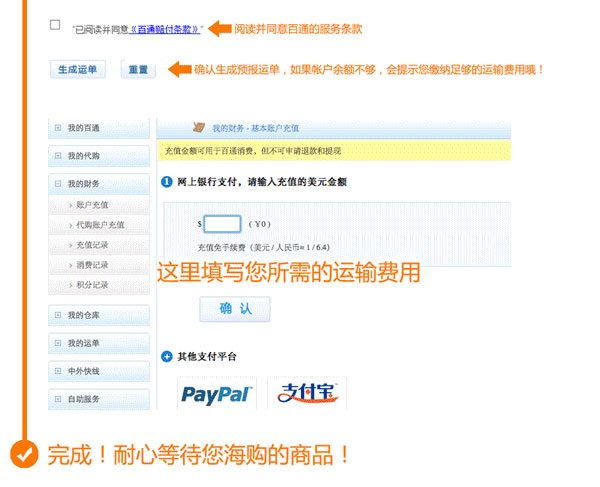
Previously, in the beginner's guide to overseas shopping, the entire process was introduced. Today, we will elaborate on the forwarding part. Forwarding has always been a relatively troublesome part of the overseas shopping process. So far, no single forwarding company has been able to achieve long-term good user experience and positive word-of-mouth. The forwarding process involves a lot of manual intervention. Additionally, some forwarding companies have seen a continuous increase in users without timely improvements in logistics capabilities, and some addresses have even been blocked by foreign e-commerce platforms, leading to a decline in reputation. Besides the forwarding company itself needing good expansion capabilities, users also need to be observant and choose a forwarding company that suits their shopping habits. A key takeaway is: don't put all your eggs in one basket. So, how do you choose a forwarding company?
I. Forwarding and ICP Filing
Currently, there are over twenty forwarding company websites in China that have undergone ICP filing (Internet Content Provider filing, a management method by the Ministry of Industry and Information Technology to prevent websites from engaging in illegal business activities). These companies can be said to be under a certain degree of supervision and are relatively more reliable. Another category consists of established forwarding companies set up by foreign enterprises abroad, such as Japan's JSHOPPERS and TENSO, which have stood the test of time. They do not have China's ICP filing but can still be trusted.
II. Factors Affecting Forwarding Costs
The popular categories for overseas shopping mainly include clothing, shoes, bags, digital products, maternal and child health products, and beauty and personal care items. Considering the conditions of cross-border transportation, apart from items prohibited by customs for import and air freight, the factors determining shipping costs and transportation smoothness mainly include:
a. Weight and Volume: Determine the basic shipping cost.
b. Quantity of Items: Whether to consolidate or split shipments. Consolidation combines goods from different orders into one shipment to save on shipping costs. Splitting occurs when purchasing a certain quantity of items that might be deemed by customs as not for personal use and subject to commercial customs declaration fees; the forwarding company then divides the multiple items in the order into different shipments.
c. Fragility: Fragile items can choose reinforced packaging, such as milk powder, laptops, etc.
d. Item Value: High-value items require purchasing insurance or paying a declared value fee for compensation in case of damage or loss during forwarding.
e. Mandatory Insurance: Forwarding companies may impose a certain insurance fee on specific types of items to ensure the smooth progress of the forwarding process. For example, since this year, Forwarding China has been charging mandatory insurance for air purifiers.
Among these, factors like weight, volume, and fragility are objective conditions that we can estimate to choose a forwarding company that waives volumetric fees or offers shipping discounts. Fragile items can choose forwarding companies that provide reinforcement services. Valuable items are best insured, declared for value, or brought back by individuals. As for the quantity of items, it's best to control it manually during purchase and avoid buying too much at once, which could lead to consequences like return shipment, making the effort not worth it.
Currently, the most common purchasing targets for overseas shopping are concentrated in the United States, followed by Europe and Japan. Multiple forwarding companies have business operations in these regions.
III. Forwarding, Direct Mail, and Customs Duties
1. Advantages of Direct Mail
Beginners in overseas shopping might be more interested in direct mail. The benefits of direct mail are simply that it's straightforward and hassle-free. Moreover, some e-commerce platforms, such as Amazon.com, offer a pre-paid customs duty service, making the overall cost of overseas shopping more transparent and easier for users to manage. Their strong after-sales service also makes overseas shopping more reassuring.
Currently, websites like Amazon.com, SHOPBOP, and Ashford in the US; Amazon Germany and kidsroom in Germany; and lookfantastic and MYBAG in the UK offer relatively comprehensive direct mail services. E-commerce platforms like eBay and Rakuten Japan also frequently offer direct mail to China for some items. It can be said that the proportion of direct mail in overseas shopping is gradually increasing, but the speed and scope of this increase are relatively limited. A large portion of goods still need to be purchased through forwarding channels, or the landed cost via forwarding is more cost-effective. This is the inevitable reason for the continued existence of forwarding.
2. Customs Duties
Whether it's forwarding or direct mail, taxes and fees are one of the important factors affecting the cost of overseas shopping. Paying taxes according to the law is a citizen's duty. Generally speaking, even after adding taxes, the landed price is still very attractive. This is why some experienced overseas shoppers, despite frequently being taxed, still enjoy it. So, it's best to maintain a calm attitude towards tax issues.
Types of Customs Duties: The taxes and fees related to overseas shopping mainly include import duties, such as personal postal items tax and value-added tax (VAT). The personal postal items tax is levied on items entering the country for personal use. The tax rate can be checked against the "Duty-paid Price Table for Personal Postal Items" published by China Customs. If the actual price of the item does not exceed twice the duty-paid price or is not less than half, it is usually taxed based on the duty-paid price for that item category. This site has also compiled a tax rate table based on popular overseas shopping categories for a more intuitive view. VAT is levied on items for commercial customs declaration, with a general rate of 17%.
The scope of application for the personal postal items tax has certain requirements regarding the quantity and type of items. For example, it cannot exceed a reasonable quantity for personal use. If one person sends 10 watches at the same time, it is highly likely to be deemed by customs as not for personal use, requiring commercial customs declaration channels and an additional 17% VAT. It might even lead to return shipment due to excessive purchase quantity. Therefore, you need to control your purchase quantity during overseas shopping and avoid overconsumption. Some e-commerce direct mail channels, such as the watch and gift e-commerce site Ashford, uniformly adopt commercial customs declaration and levy VAT.
3. Pre-paid Customs Duties
Because personal customs declaration procedures are relatively cumbersome, some e-commerce platforms, including Amazon.com and GILT, support a pre-paid customs duty service. This means estimating the tax during checkout and paying it together with the order amount. When the package goes through customs, the carrier will pay the duty on your behalf. However, the pre-paid customs duty policies vary. For example, as mentioned earlier, Amazon.com's direct mail pre-paid customs duty policy is "refund if overpaid, no additional charge if underpaid," while GILT requires paying VAT. Therefore, you need to pay extra attention during checkout. You can also compare the landed cost of direct mail with the cost of forwarding and choose the method that suits you better.
Additionally, there are cases without pre-paid customs duties. Does not pre-paying customs duties mean there are no duties? The answer is not necessarily. If the item's value does not meet China Customs' taxation threshold, it is indeed possible that no duties are owed. However, if the item's value exceeds the threshold, but you choose direct mail without pre-paying duties, you might still need to pay the duties yourself during customs clearance. In such cases, it's best to confirm with the e-commerce customer service first.