
It is well known that beauty and skincare products have been around for centuries, but for most of history, cosmetics were only available to the highest social classes. In some cultures, ordinary people were even forbidden from wearing makeup.
In the 19th century, using cosmetics was closely associated with the gray areas of society, as only actresses and prostitutes wore makeup. In vintage American cars, prostitutes who wore rouge and lipstick were called "painted ladies" due to their heavy makeup, clearly indicating that using cosmetics was not considered a respectable thing.
So, how did the aesthetic economy evolve step by step to what it is today?
This brings us to the founder of one of the world's earliest international cosmetic brands, HR Helena Rubinstein — Helena Rubinstein.
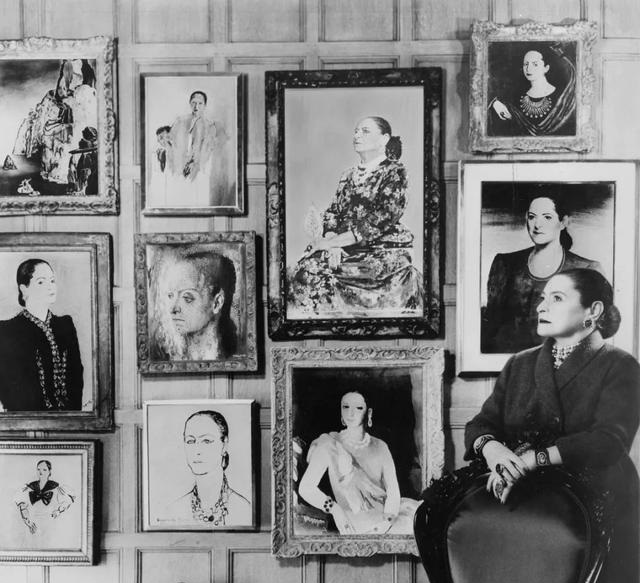
Helena Rubinstein was an entrepreneur, feminist activist, artist, art collector, and philanthropist. She not only built her personal brand from scratch but also established a world-class cosmetics empire, becoming one of the wealthiest women in the world.
In 1872, Helena was born into a poor Jewish neighborhood, one of eight daughters. As the eldest daughter in a conservative Orthodox Jewish family, she was rebellious from a young age, avoiding housework and disobeying her parents' orders.
At 24, when her mother tried to marry her off to an older Orthodox man, she had had enough. Helena not only resolutely refused the marriage but also renounced her religious faith, traveling alone to Australia, determined to be a woman who could decide her own fate.
When this small girl, just 4 feet 10 inches (about 147.32 cm) tall, set foot on the foreign land of Australia, she couldn't even speak English. All she carried was a parasol and 12 jars of face cream given to her by her mother.
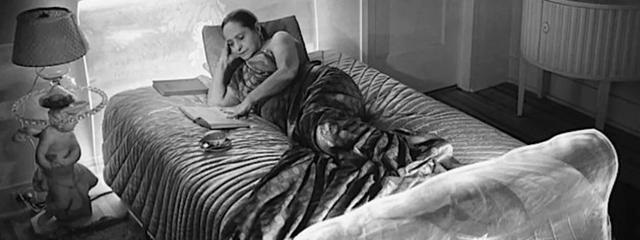
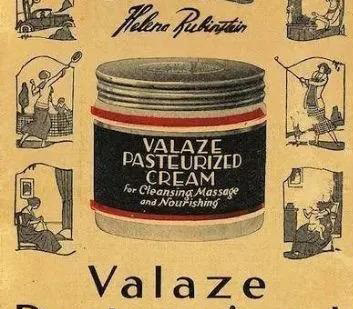
These 12 jars of cream, very natural, were called "Valaze," meaning "gift from heaven" in Hungarian, and were sufficiently appealing.
Clearly, Helena had an innate marketing ability. She began considering factors like packaging and appearance, and gave the cream a catchy name — these were the origins of modern marketing techniques.
Initially, Helena worked with her uncles at the market in Coleraine, exposed to the elements day and night. This life was unbearable for Helena, who had a rich adventurous spirit.
However, Helena quickly realized this was a good place to start her skincare business. First, the weather was very hot, and the town's women had very dry skin. Second, one of the basic ingredients of skincare cream was lanolin, an oily secretion from sheep wool, and Australia was a place full of sheep.
Soon, an opportunity came. When Helena was at a loss, she remembered an old pharmacist at a small pharmacy in Sandford. Every week, when she rode with her uncles to the market, she would stop to see him. His small shop was dusty, filled with jars of herbs, bark, oils, potions, ointments, and salves, making the already untidy shop even messier. But Helena loved the herbal scents. One day, she finally gathered her courage and walked straight up to the old pharmacist.
"Hello, Mr. Henderson. Would you be willing to hire me to help you?"
Old Henderson couldn't offer Helena a generous salary — only 24 shillings a month for working non-stop all day. But he taught Helena everything he knew without holding back.
Lanolin was the secret ingredient in Helena's cream, but to mask its pungent smell, she tried mixing it with lilies, water lilies, herbs, lavender, and honey, and diligently studied the scientific works in the small pharmacy.
Choosing to Start Her Own Business
In 1902, at age 30, Helena finally set foot in the city she had always dreamed of — Melbourne. She had fantasized countless times in her hometown and in Coleraine about starting her beauty empire on this land.
At this time, Australia had just introduced the hard-won right to an 8-hour workday, and women's suffragists were particularly active. Through the efforts of these feminists, most Australian women voted in 1902. Sometimes we have to admit that times create heroes.
"Helena Rubinstein's astonishing rise in Australia can be attributed to her innate intuition for timing, an essential condition for success in business and love. She was in the right place at the right time — Australia, a country where women were just beginning to break free from long-standing constraints." And Helena, a woman eager to succeed among modern women, happened to be there.
That same year, Helena moved out of her three-room apartment next to a restaurant at 138 Elizabeth Street and, with a borrowed 100 pounds, opened her first beauty salon at 243 Collins Street.
There, she touted her "Valaze" cream as being imported from Russia, made from rare herbs from the Carpathian Mountains, attracting a large wave of customers.
Helena made a fortune and expanded her business to New Zealand, London, Paris, and New York.
In 1914, Helena went to the United States to establish her own brand.
At that time, the US had not yet joined the World War. In New York, people used beauty products more frequently than in Europe and were wealthier, making the beauty and skincare business highly profitable. The only challenge was that Americans still viewed local brands as mass-market and cheap.
At the time, Americans bought luxury goods imported from France. Building an American brand that could rival French luxury brands was both an opportunity and a challenge for Helena.
She publicly claimed to be a famous European beauty entrepreneur and, as before, focused on operating beauty salons as efficient distribution channels for her products. At the same time, Helena carefully created a pleasant shopping environment, decorating her salons with avant-garde art to elevate the overall customer experience.
It had been 12 years since she founded the world's first beauty salon in Melbourne. During these 12 years, through continuous research, Helena created the face cream she had used in her childhood.
Introducing the Concept of "Scientific Skincare"
One of Helena's great business strategies was providing scientific backing for her brand. She proposed the concept of scientific skincare early on and continuously focused on scientific research for the sake of beauty, truly achieving "letting science serve beauty."
Even today, salespeople in white lab coats can still be seen behind cosmetic counters, an influence from Helena Rubinstein.
In 1910, Helena first proposed the skin classification method of "dry, oily, and combination," which remains a basic rule in the skincare industry today.
She was also the one who truly brought the concept of "anti-aging" into the beauty industry. Regarding age, Helena herself was somewhat secretive. When she first immigrated to Australia at 24, she claimed to be only 20.
Helena was very concerned about age. She firmly believed that people's fear of aging was the reason her skincare products sold so well.
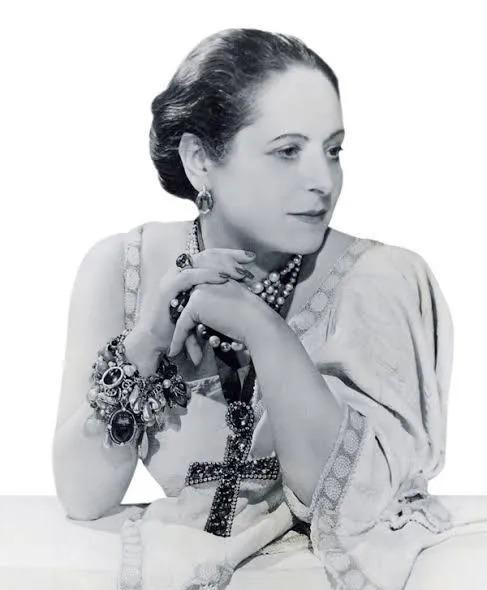
However, Helena Rubinstein was also a controversial figure. Some consider her an outstanding businesswoman, the founder of the modern skincare industry, who provided job opportunities for hundreds of thousands of women and brought benefits to female consumers, giving them confidence in their appearance.
Yet, as a pioneer of anti-aging, Helena once said: "Women around 30 need to spend the rest of their lives fighting and hiding aging."
Thus, some believe this is a distorted interpretation of beauty and the root of pressure causing female appearance anxiety. Then, people question Helena's entrepreneurial abilities. Were the stories about her mother's cream and her medical qualifications really as she claimed?
Shortly before her death, Helena, who had always been evasive about the ingredients of the "Valaze" cream, showed a piece of paper to the last man in her life, Patrick O'Higgins. It was Jacob Lykusky's famous magic formula. She insisted the young man read the formula, considering it a page in history.
On this aged, yellowed, and torn paper, Helena had written down all the ingredients in her large, old-fashioned handwriting, every stroke carefully and meticulously. O'Higgins expected to see some exotic ingredients on the list, like oriental almond essence or Carpathian conifer bark extract, but he was greatly disappointed.
It only read: "Vegetable wax, mineral oil, and sesame." Even the proportions of these ingredients were lost.
Until the very end, Helena kept the ingredients of the original "Valaze" cream a secret. It can be imagined that it was neither as smooth nor as bright as later products, and its efficacy was incomparable, but it was full of hope — a brilliant beginning.
By the time Helena passed away in 1965, the Helena Rubinstein brand had a presence in over 30 countries and regions worldwide, with 14 factories and dozens of beauty salons.
Beauty Is Not Boring at All
Helena Rubinstein built an empire through her wisdom and strength in the 20th century, an era of women's liberation, and endowed the women of that time with a new power: beauty.
"Beauty is not boring at all. To me, it is a new power, a means for women to maintain their independence," was one of Helena's favorite sayings.
In 1988, L'Oréal Group acquired the company, which had weathered many storms after Helena's death. This was a turning point for Helena Rubinstein. Under the guidance of the L'Oréal giant, it would gradually restore its former glory.
As L'Oréal Group's top luxury beauty brand, in 2015, Helena Rubinstein partnered with Switzerland's top medical aesthetics institution, LACLINIC MONTREUX, to launch its flagship product, the "Black Bandeau" face cream.
The star product, the "Green Bottle" serum, sells one bottle every three minutes worldwide.
In 2019, Faye Wong became the global brand ambassador for Helena Rubinstein. Global Brand President Elisabeth Sandager believed that Faye Wong is always at the forefront of the times, living her own ultimate life, which perfectly aligns with the pioneering spirit of "strong, determined, intelligent, and charming" that Helena Rubinstein pursues.
Today, even if people rarely mention Helena Rubinstein's legendary story, her legacy is everywhere.
French author Michèle Fitoussi once wrote in her book: "After a quick review of her tumultuous life, my thoughts were confirmed. She is little known, almost forgotten, but her extraordinary life spanned nearly a century and crossed four continents."